
ERP Software

Project Overview
The client was a shoe manufacturing company using an outdated ERP application to manage production, inventory, and operational workflows.
However, the system had several usability issues:
Complex navigation
Poor visual hierarchy
Inefficient workflow processes
Limited role-based access control
The goal of the project was to restructure the user experience, modernize the interface, and improve operational efficiency for internal teams.
My Role
I worked as the Senior UX/UI Designer for this project.
My responsibilities included:
Gathering user requirements from stakeholders
Analyzing the existing ERP system
Redesigning the user flow and workflows
Creating wireframes and UI designs
Implementing a scalable design system using Flowbite
Collaborating with developers during implementation
Tools
Figma
Wireframes, UI design, and design system components
Flowbite Design System
UI framework used to build consistent and scalable components
Jira
Task management, sprint tracking, and feedback from the development team

The Challenge
The existing ERP application had several challenges:
The interface was visually outdated
Navigation was confusing for employees
Manufacturing workflows were not clearly structured
Role-based access permissions were limited
Employees needed multiple steps to complete simple tasks
These issues slowed down daily operations for production, inventory, and management teams.
The Approach
To understand the system problems, we conducted:
Stakeholder Discussions
Factory managers
Operations team
System administrators
Existing System Analysis
Studied current workflows
Identified usability issues
Mapped existing user journeys
Key Insights
Users wanted faster access to daily tasks
Production tracking needed better visibility
Different roles required different levels of access
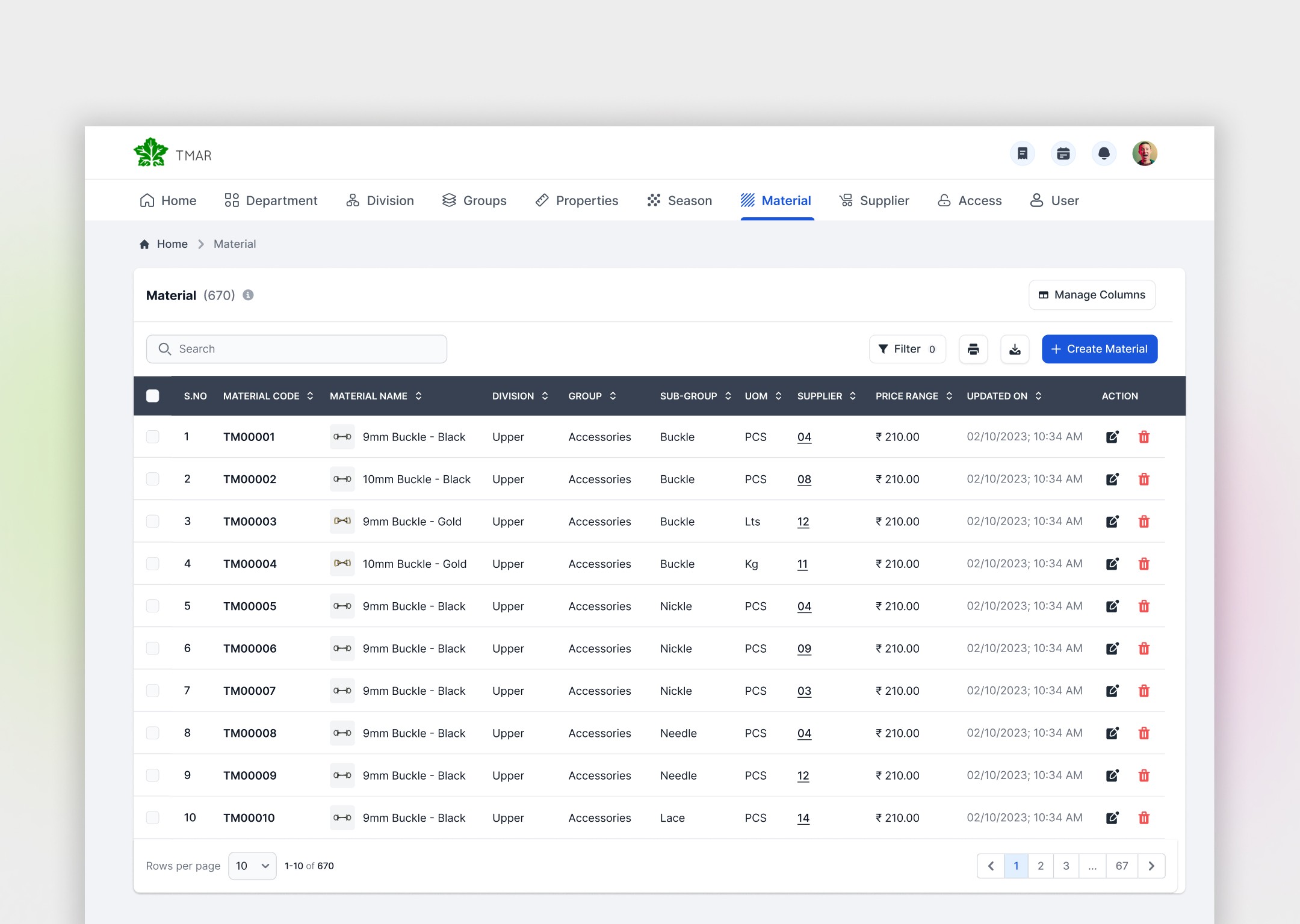
Highlights
Based on the research, the redesign focused on three main improvements:
1. Workflow Simplification
Restructured the ERP process flows to reduce unnecessary steps.
2. Role-Based Access Control
Created structured role permissions for different users such as:
Admin
Production Manager
Inventory Manager
Operators
3. Modern Interface Design
Introduced a clean and consistent UI using the Flowbite design system to improve usability and scalability.

Outcome
The redesigned ERP system delivered several improvements:
✔ Improved workflow efficiency
✔ Reduced task completion time for employees
✔ Better visibility of production operations
✔ Modern and scalable UI system
✔ Easier navigation across ERP modules
The new design helped employees perform their daily tasks faster and with fewer errors.
